September PE Plan: 6 Essential Elementary PE Skills for Month #1
Looking for a September PE Plan that will help you kick off the school year with confidence? You’ve come to the right place!
A successful September PE curriculum is about much more than playing games—it’s about teaching the essential skills students need to stay safe, work together, and build confidence in elementary PE.
SEPTEMBER PE PLAN
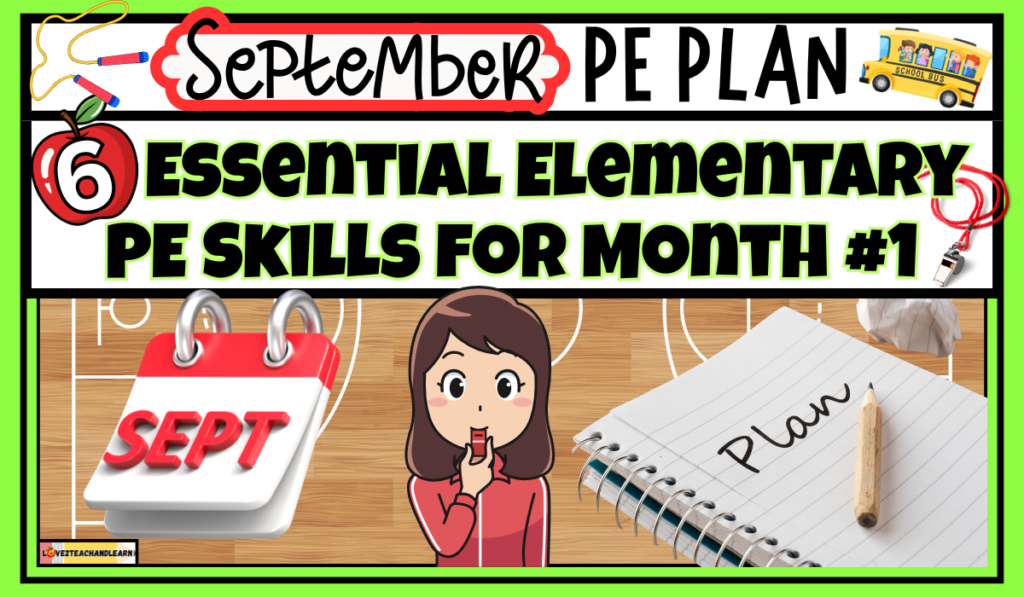
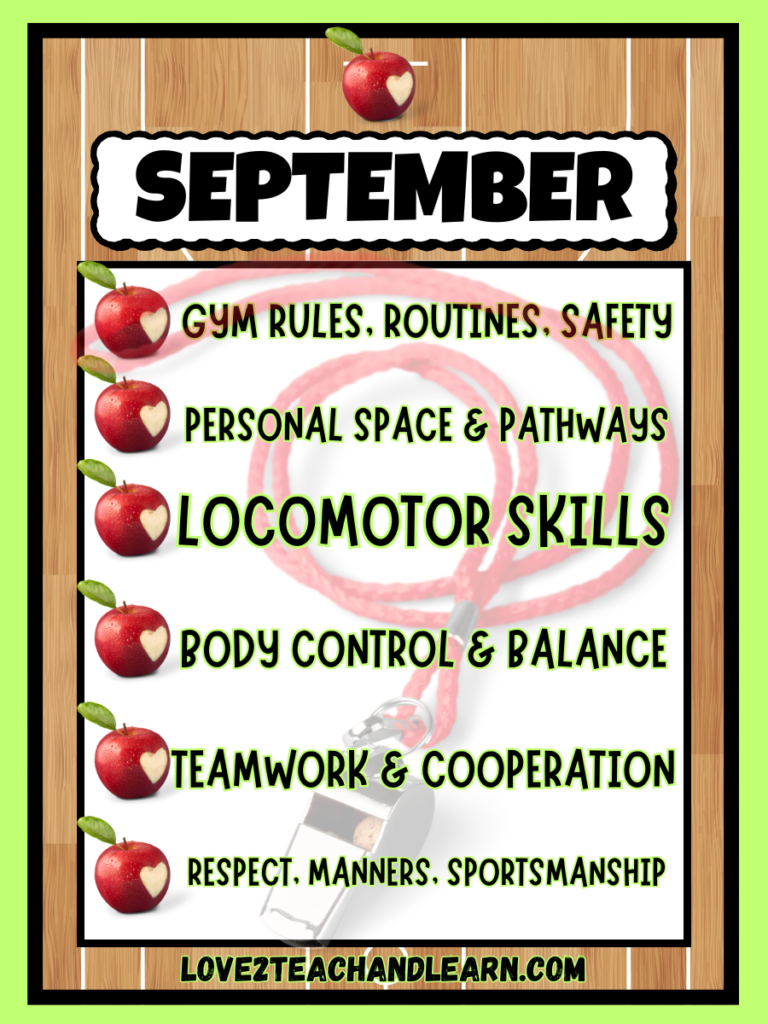
During the first month of physical education, I focus on six foundational skills that set the stage for a fun and successful year including:
- GYM RULES, ROUTINES, & SAFETY
- PERSONAL SPACE & PATHWAYS
- LOCOMOTOR SKILLS
- BALANCE & BODY CONTROL
- COOPERATION & TEAMWORK
- RESPECT, MANNERS, & SPORTSMANSHIP
Whether you’re a brand-new teacher or a seasoned veteran searching for fresh K-5 PE lesson plans or Back to School PE ideas, this September PE Plan will help you create a positive learning environment from day one.
Want to Save Massive Time and Start the School Year Stress-Free with my Complete SEPTEMBER PE Lesson Plan BUNDLE?
YOU GOT IT! You can Snag the Complete Month #1 BUNDLE RIGHT HERE!

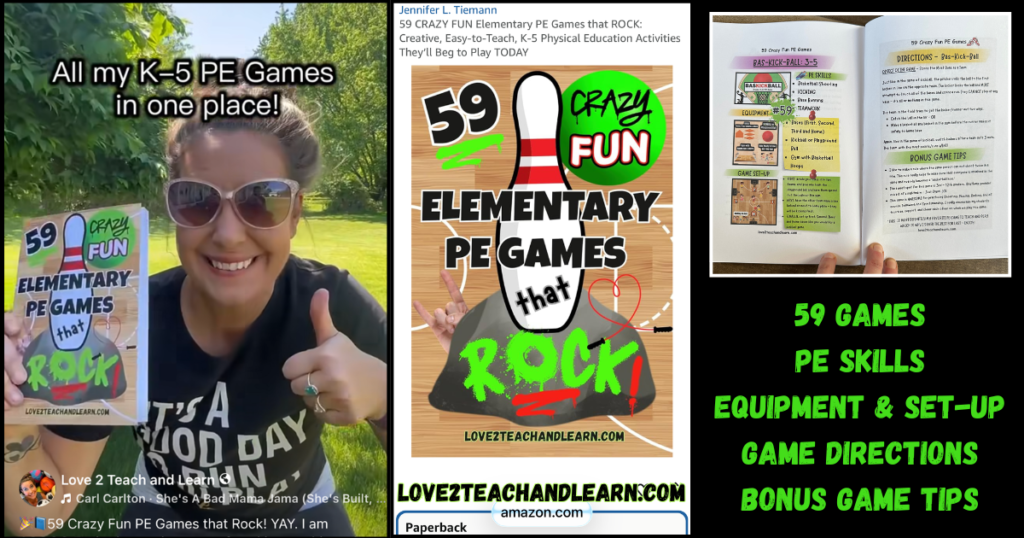
Hi there, it’s so great to meet you! I’m Mrs. T. (or you can call me Jen) – a Michigan mom, wife, new grandma (aka “Jemma”) K-12 PE teacher, blogger (Love 2 Teach and Learn) and author of 59 CRAZY FUN Elementary PE Games that ROCK!
I love teaching PE class because I get to spend time telling Silly SPORTS JOKES and exercising, while laughing with my students.
I’m also on a serious mission to MAKE SCHOOL FUN AGAIN and I believe physical education class is the ABSOLUTE BEST WAY to do just that!
READY! SET! LET’S MAKE SCHOOL FUN AGAIN!
🎙️I also dedicated an entire episode of the CRAZY FUN PE with Mrs. T. podcast to my September PE plan! Listen below as I walk you through the six essential skills I focus on during the first month of school—and why they help set the tone for the entire year.
▶️LISTEN RIGHT HERE:
GYM RULES, ROUTINES & SAFETY
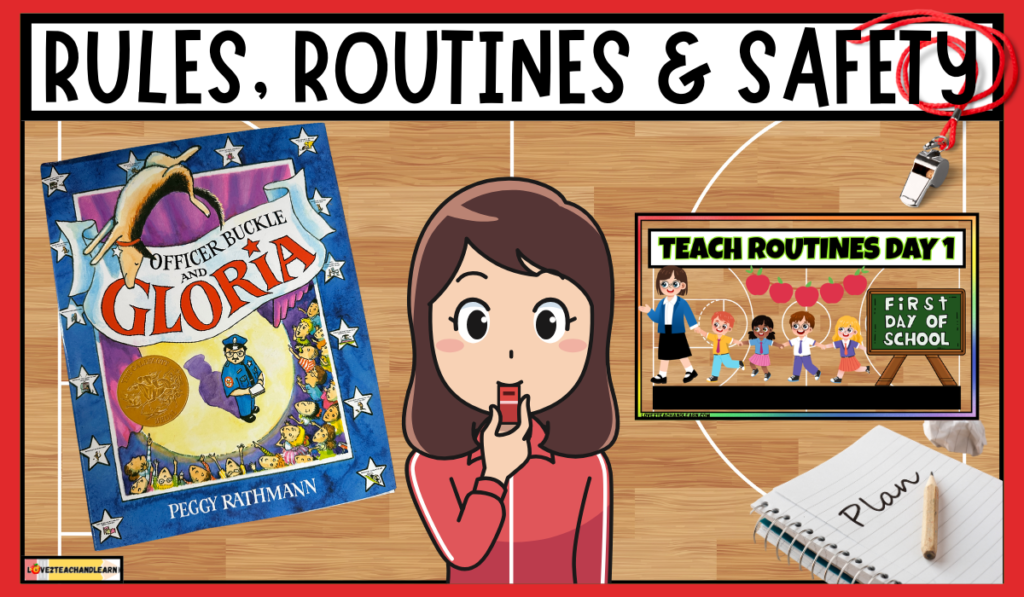
Teaching gym rules, routines, and safety during the first month of school lays the foundation for a fun, organized, and successful year in elementary PE.
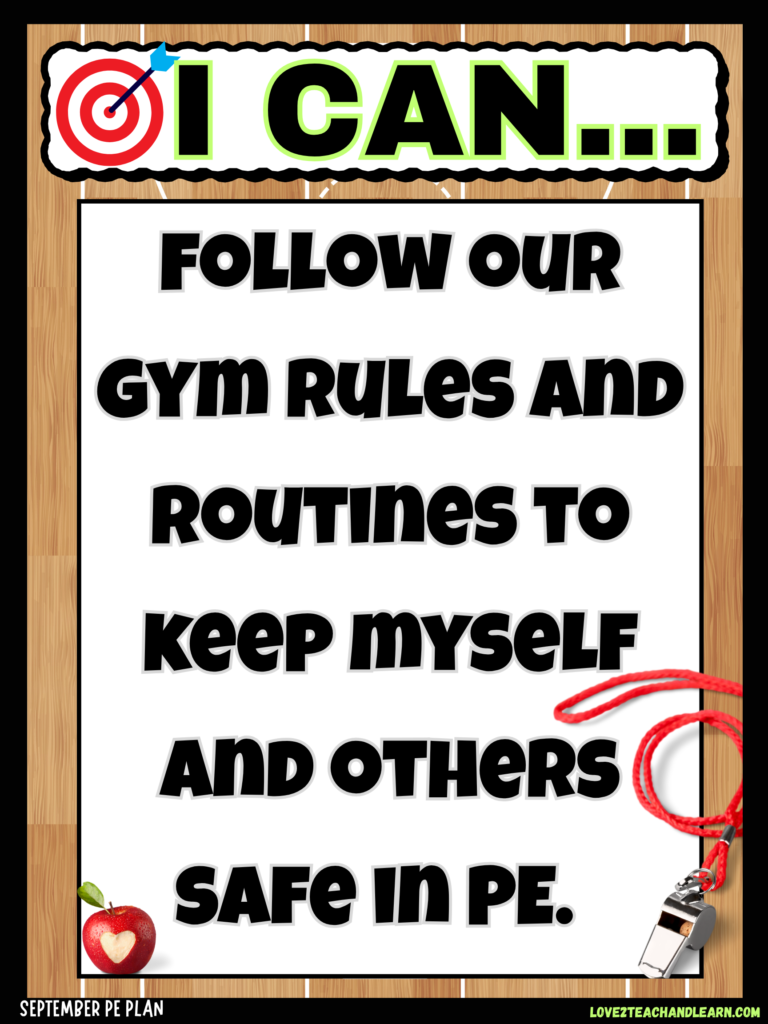
While students are excited to jump right into games and activities, taking the time to teach simple expectations, daily routines, and safe behaviors helps everyone know exactly what to do.
A few extra lessons focused on gym rules and safety in September will pay off all year long.
RECOMMENDED TEACHING RESOURCES AND IDEAS FOR YOU
TEACH ROUTINES FROM DAY #1 – This is HUGE and has the potential to make or break your school year. It’s very important to think about and make a plan for how you want your students to enter the gym, as well as signals for stopping play, cleaning up equipment and dismissal.
- You can read my “EXACT” plan for having a Perfect PE First Day of School RIGHT HERE.
ESTABLISH CLEAR AND SIMPLE RULES FROM DAY #1 – I say K.I.S.S. (Keep it Simple Silly – LOL). On the first day of elementary PE class, it’s best to share your expectations and teach just a few simple rules instead of giving students a long list to remember. Young children learn best when directions are clear and easy to follow.
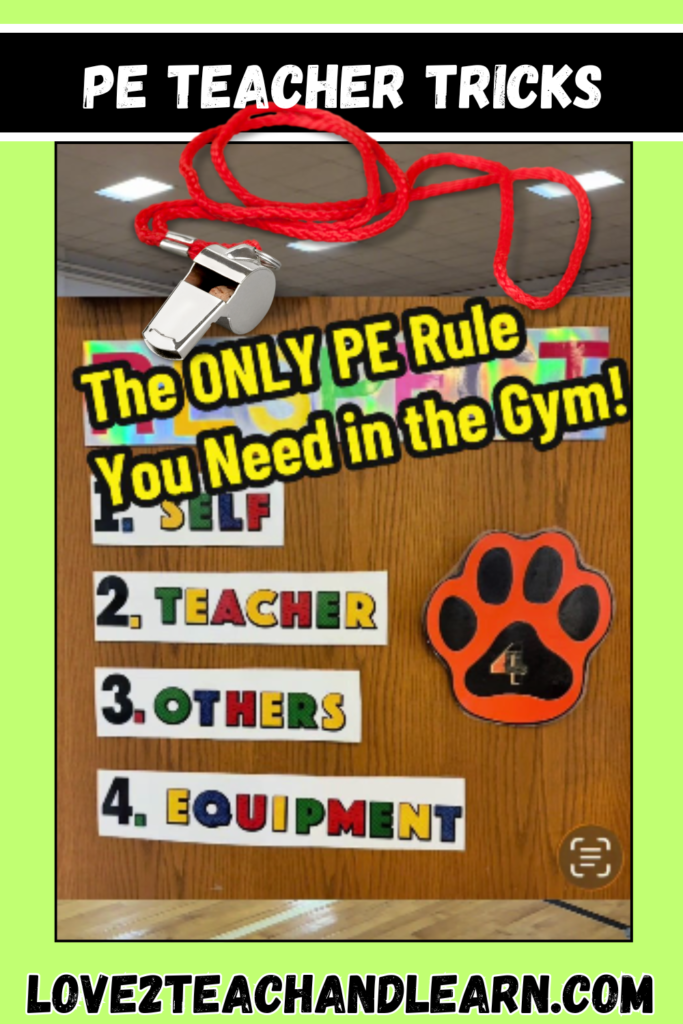
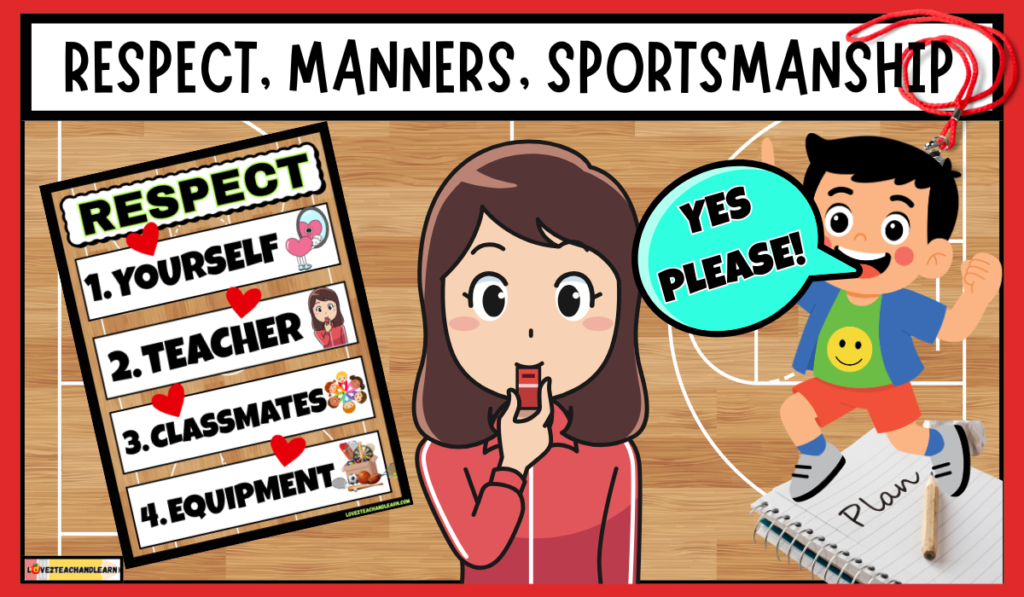
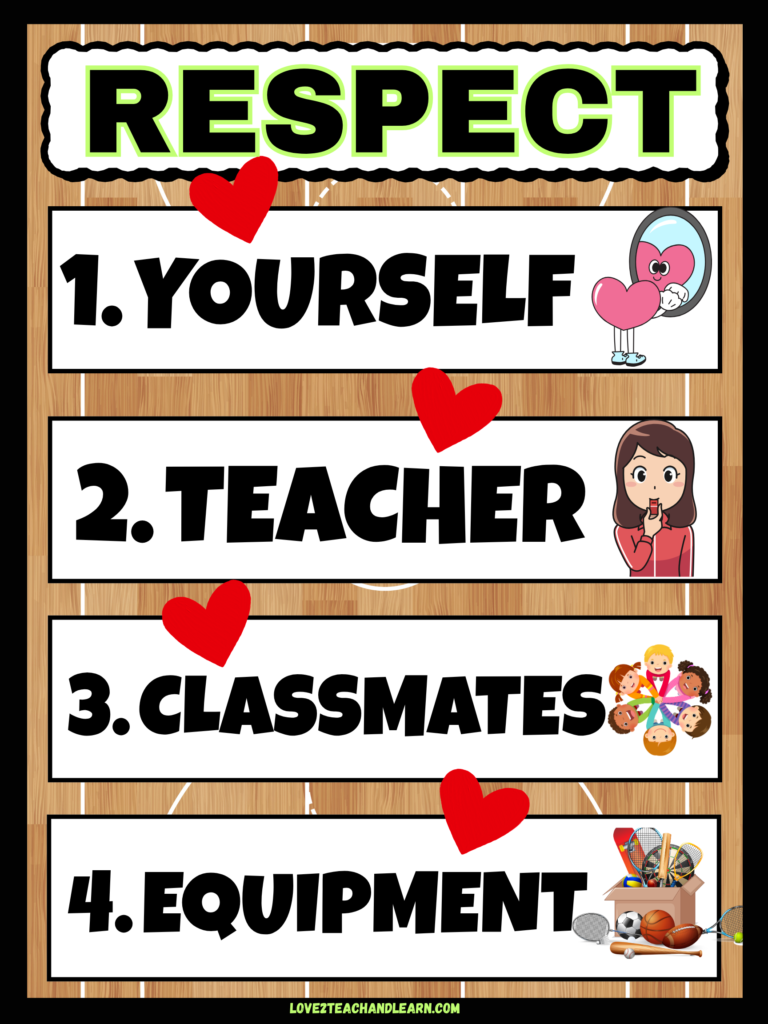
- I have only ONE RULE that I call “RESPECT 4” and it works amazing. My students must: 1. RESPECT THEMSELVES 2. RESPECT THE TEACHER 3. RESPECT OTHERS (classmates) 4. RESPECT THE EQUIPMENT.
READ ALOUD THE BOOK: Officer Buckle and Gloria – This book is an excellent safety read-aloud and works best with K-3 PE students. It’s the perfect lead up to a discussion about gym safety rules, listening and following directions.
- I have the book and prefer to read it aloud to my students but if you don’t have the book you can watch and listen to the book RIGHT HERE.
*RULES, ROUTINES, and SAFETY BONUS TIP – A few extra lessons focused on gym rules and safety in September will pay off all year long.
PERSONAL SPACE & PATHWAYS
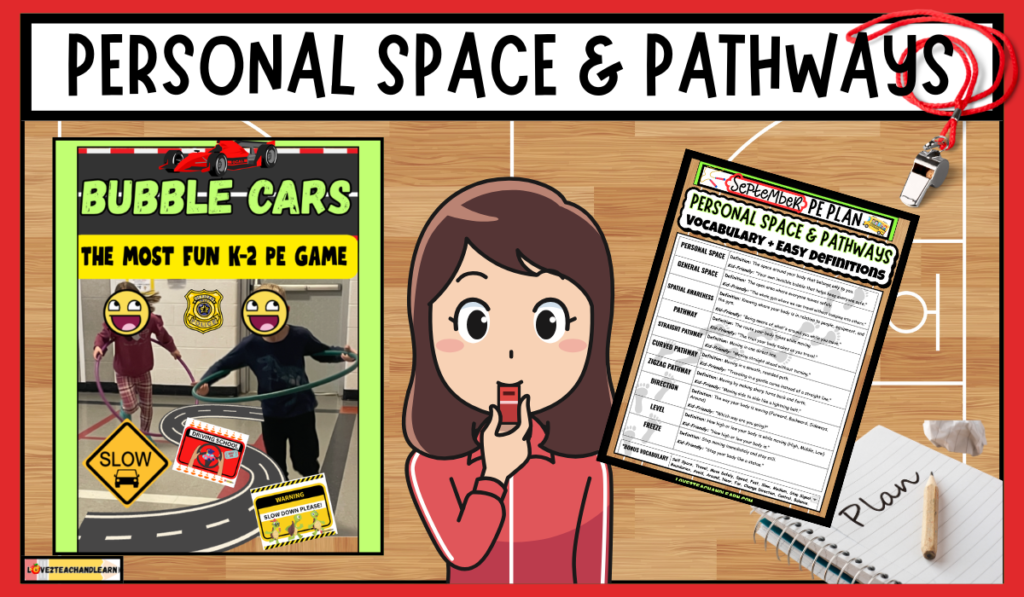
Teaching personal space and pathways during the first month of school helps students learn how to move safely and confidently in the gym.
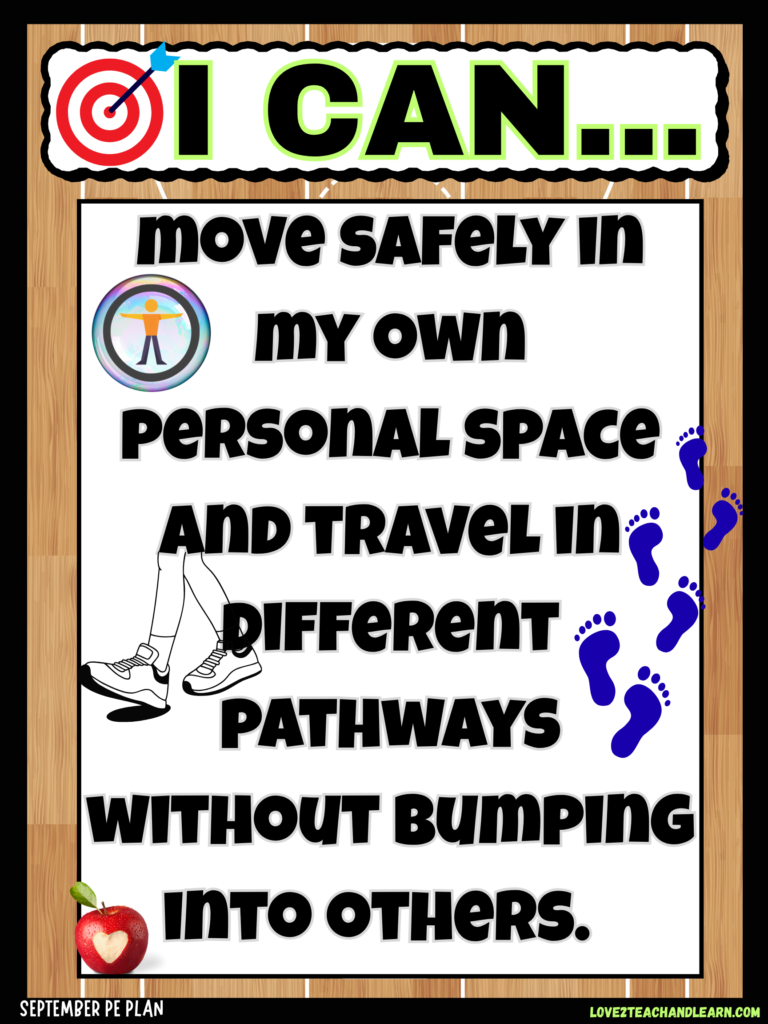
Before introducing games, sports, and fitness activities, students need to understand how to travel through general space without bumping into classmates or equipment.
By practicing concepts like personal space, straight and curved pathways, changing directions, and moving at different speeds, students develop the spatial awareness they’ll use in every PE lesson throughout the year.
RECOMMENDED TEACHING RESOURCES AND IDEAS FOR YOU
START WITH ESSENTIAL VOCABULARY – Before students can successfully practice personal space and pathways, they need to understand the vocabulary that goes with these important movement concepts.
- The 10 key terms I focus on are: Personal Space, General Space, Spatial Awareness, Pathway, Straight Pathway, Curved Pathway, ZigZag Pathway, Direction, Level, and Freeze.
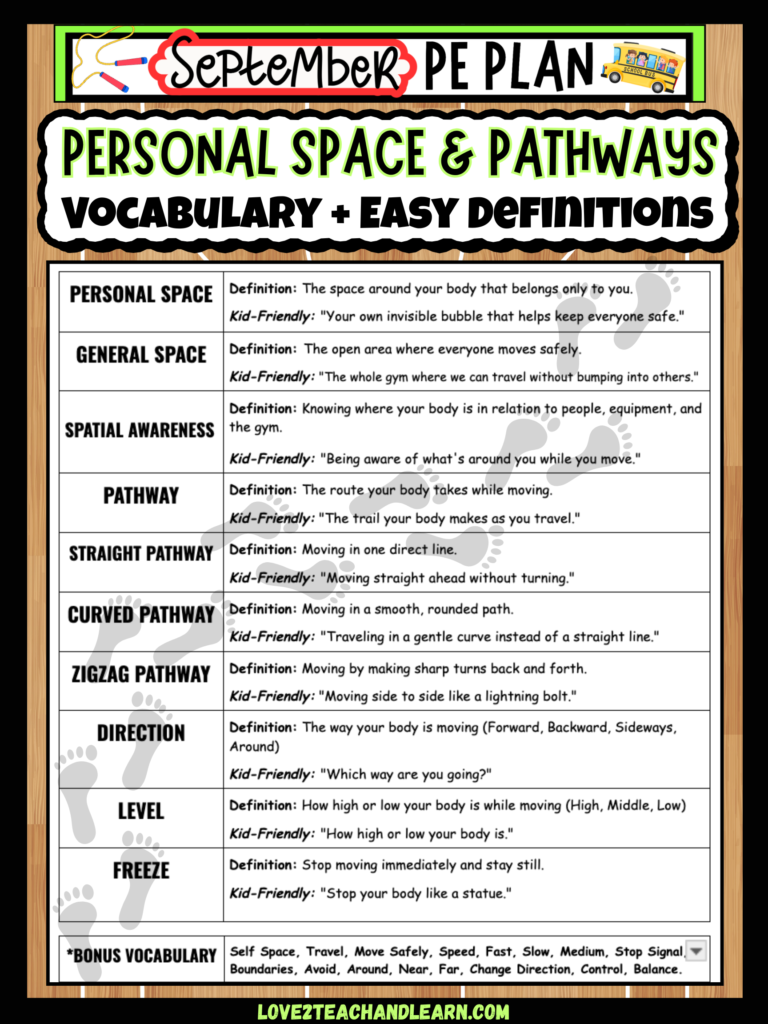
You can grab a FREE COPY of my 10 Essential Personal Space and Pathways Vocabulary + Kid-Friendly Definitions List RIGHT HERE.
USE PERSONAL SPACE READ-ALOUDS – Using children’s books is a fantastic way to reinforce your PE lessons while connecting literacy and physical education. My two favorite books about personal space are:
- Personal Space Camp by Julia Cook – perfect for introducing “personal space bubbles” before practicing locomotor skills around the gym.
- Clark the Shark by Bruce Hale – leads into a great class discussion to have with your students before playing movement games.
USE PATHWAYS AND MOVEMENT READ-ALOUDS – My two favorite pathways and movement read-alouds are:
- From Head to Toe by Eric Carle – Students imitate animal movements while practicing different pathways, body control, levels and directions. You can watch the video version of the book here.
- Barnyard Dance! by Sandra Boynton – Perfect for following movement directions, traveling in different ways, rhythm and spatial awareness.
USE EQUIPMENT THAT TEACHES PERSONAL SPACE AND PATHWAYS – Poly Spots, Cones, Hula Hoops, Floor Tape/Lines, Bean Bags, Scooters, Pool Noodles and Jump Ropes are all common pieces of equipment that can help you teach personal space and pathways to your students.
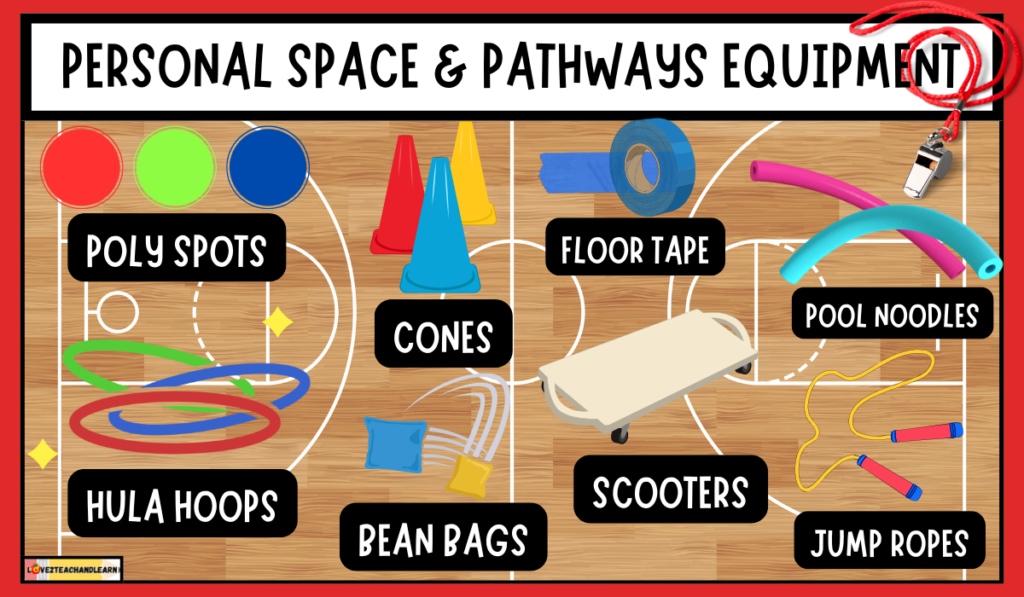
PLAY QUICK ACTIVITIES WITH EQUIPMENT THAT REINFORCES PERSONAL SPACE AND PATHWAYS – Here are a few examples for you.
- POLY SPOTS (Personal space, stopping, body control, spatial awareness)
– Find Your Home Spot, Spot to Spot Travel, Musical Spots or Freeze Spot, Color Call and Spot Swap. - CONES (Pathways, changing direction, avoiding obstacles) – Zigzag Pathway Course, Curved Pathway Walk, Figure Eight Travel, Around the Cone Challenge, and Traffic Cone Obstacle Course.
- HULA HOOPS (Personal space, balance, pathways) – Personal Space Bubble, Hoop to Hoop Travel, Jump in, Jump Out, Hoop Islands or Musical Hoops, and Freeze Spot.
- FLOOR TAPE/LINES (Straight pathways, balance, control) – Follow the Line, Straight Pathway Challenge, Curved Pathway Challenge, Curved Taped Pathway, Line Walking (Skipping, Galloping, Speed Walking), Sideways Line Travel.
- BEAN BAGS (Body control, pathways, balance) – Bean Bag Balance Walk, Freeze and Balance, Carry Without Dropping (Balance on Different Body Parts), Change Levels (High, Medium, Low) without dropping.
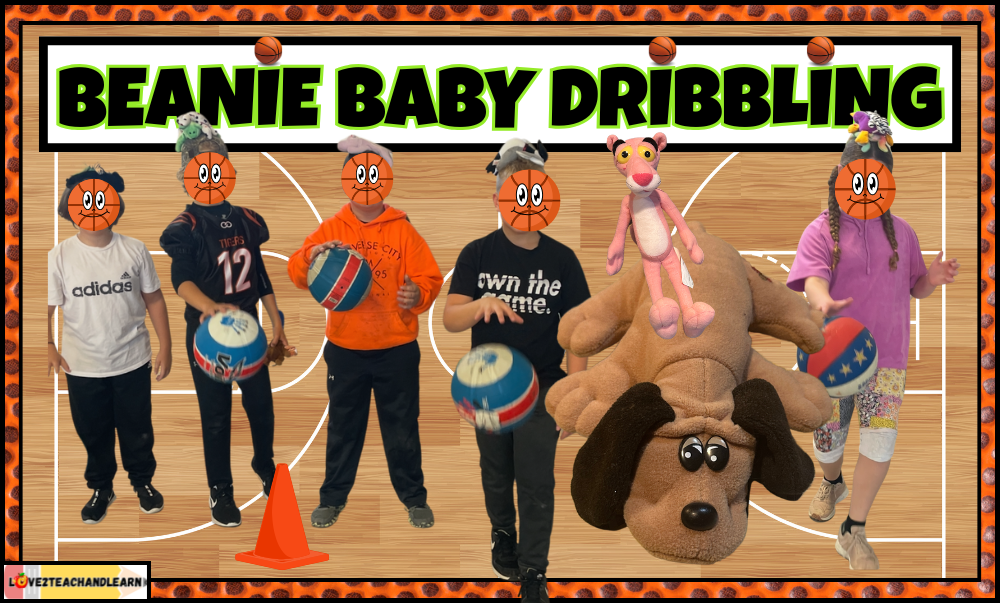
- BEANIE BABIES work great for these activities too and add in a little extra fun. I even add a basketball sometimes and call it “Beanie Baby Dribbling.”
- SCOOTERS (Spatial awareness, pathways) – Scooter Pathways, Follow the Leader, Curved Scooter Course, Around the Cones, and Traffic Jam Challenge.
- POOL NOODLES (Movement pathways, body awareness) – Pool Noodle Gates, Pathway Maze, Step Over, Under and Around, and Partner Tunnel.
- JUMP ROPES – (Pathways, movement patterns) – Straight Pathway Lines, Curved and ZigZag Pathways, River Crossing, and Jump Over the Path.
PLAY FUN PE GAMES THAT REINFORCE PERSONAL SPACE AND PATHWAYS. Here’s a list of my favorites:
- BUBBLE CARS – This is probably my favorite personal space game. Get all of the “How to Play” game details RIGHT HERE. It’s also a great PE game for balance, body control and for practicing locomotor skills. It is Game #50 in my 59 CRAZY FUN PE Games book.
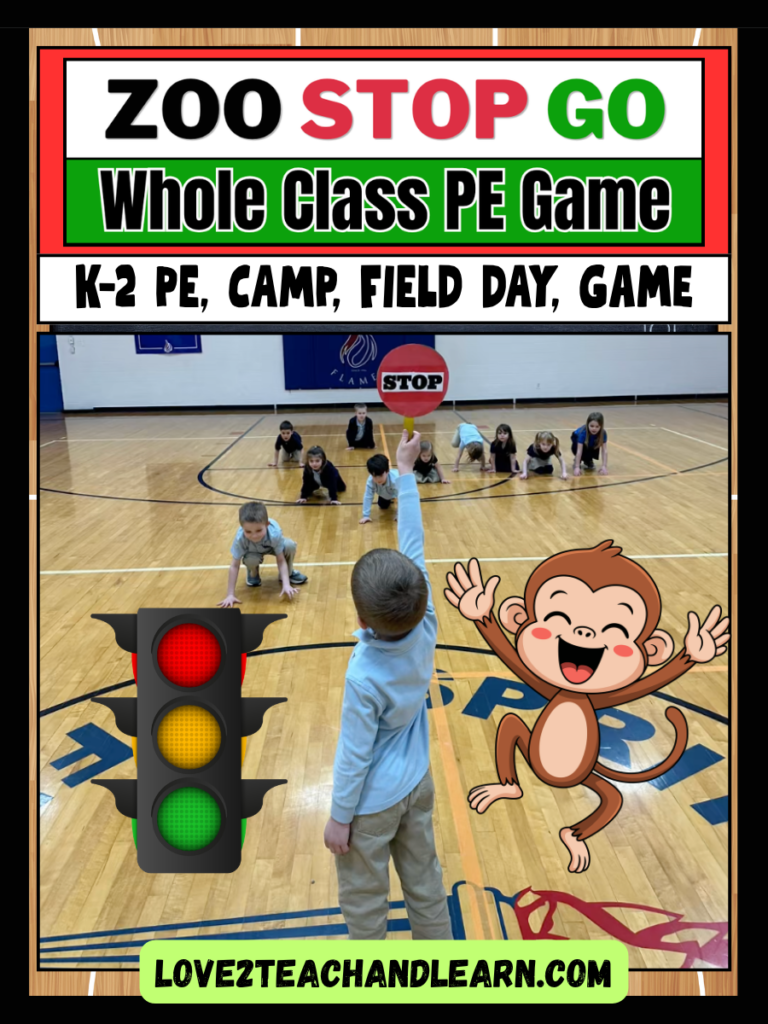
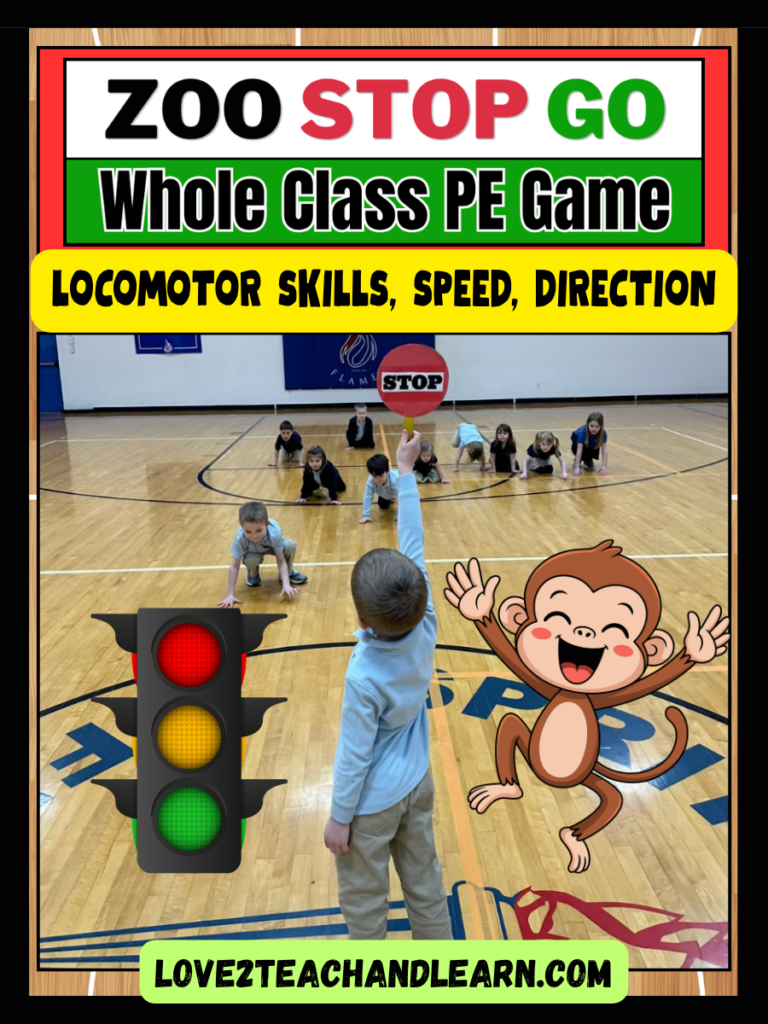
- ZOO! STOP! GO! – This is an awesome pathways, direction and speed PE Game. Get all the “How to Play” details RIGHT HERE. Zoo! Stop! Go! is Game #47 in my 59 CRAZY FUN PE Games book.
- MUSICAL SIGHT WORDS – A great game for teaching personal space, locomotor skills and pathways. It even includes some reading and sight word practice for kindergarten – second grade students. Get all the details for this game RIGHT HERE. Musical Sight Words is Game #51 in my PE Games book.
USE POLY SPOTS TO PRACTICE PERSONAL SPACE EVERY DAY DURING WHOLE CLASS EXERCISES – You can watch exactly how I do it RIGHT HERE.
*PERSONAL SPACE & PATHWAYS BONUS TIP – Have students practice moving safely in general space before introducing any balls, jump ropes, or other equipment. Once students understand personal space, pathways, and how to move without bumping into others, classroom management becomes much easier.
LOCOMOTOR SKILLS
Teaching locomotor skills during the first month of school helps students develop the confidence and movement patterns they’ll use throughout the entire year in elementary PE.
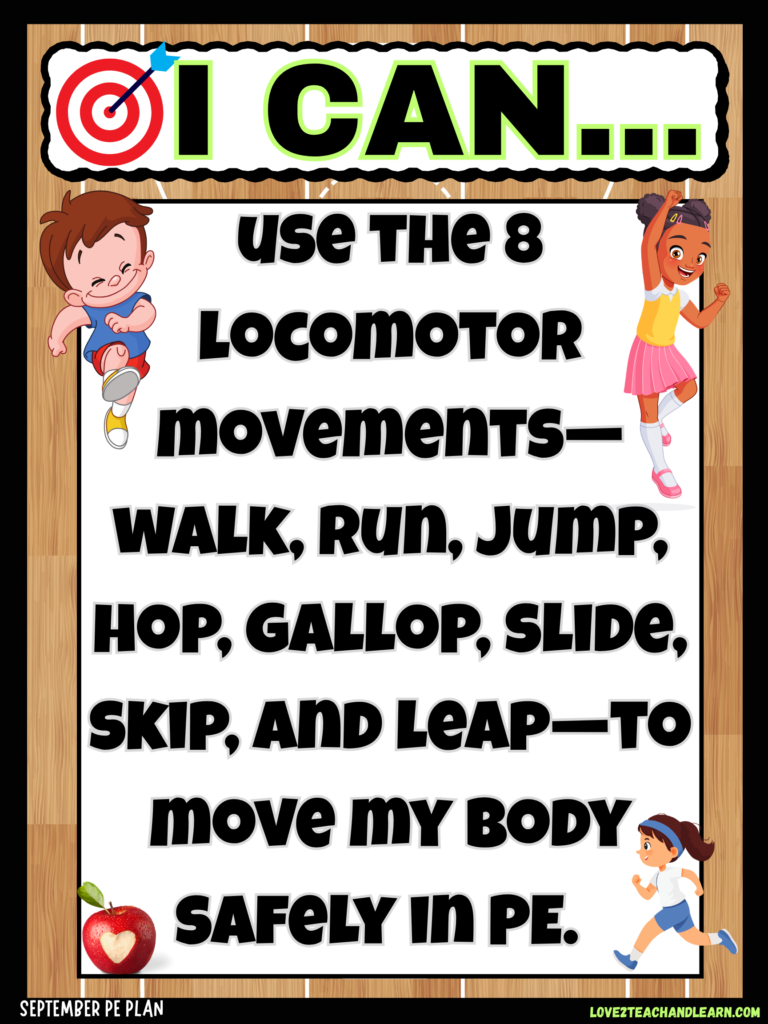
Fundamental skills like walking, running, hopping, skipping, galloping, sliding, leaping and jumping are the building blocks for nearly every game, sport, and fitness activity students will experience.
By giving students plenty of opportunities to practice these essential movements early in the school year, you’ll improve their coordination, balance, body control, and overall confidence.
RECOMMENDED TEACHING RESOURCES AND IDEAS FOR YOU
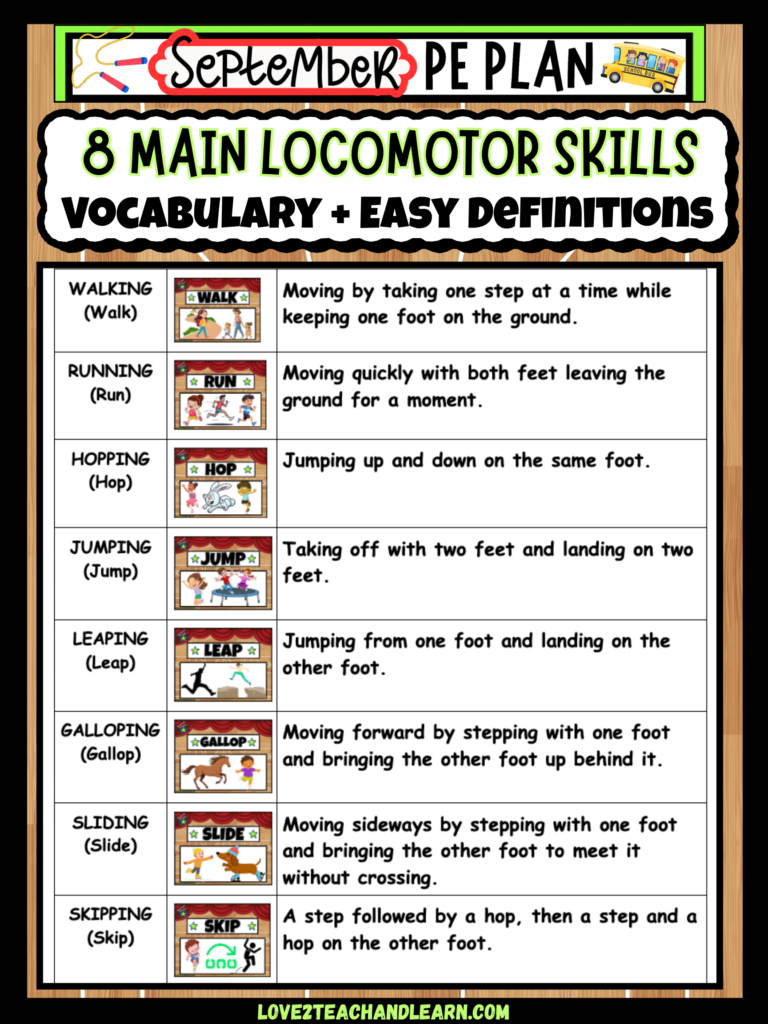
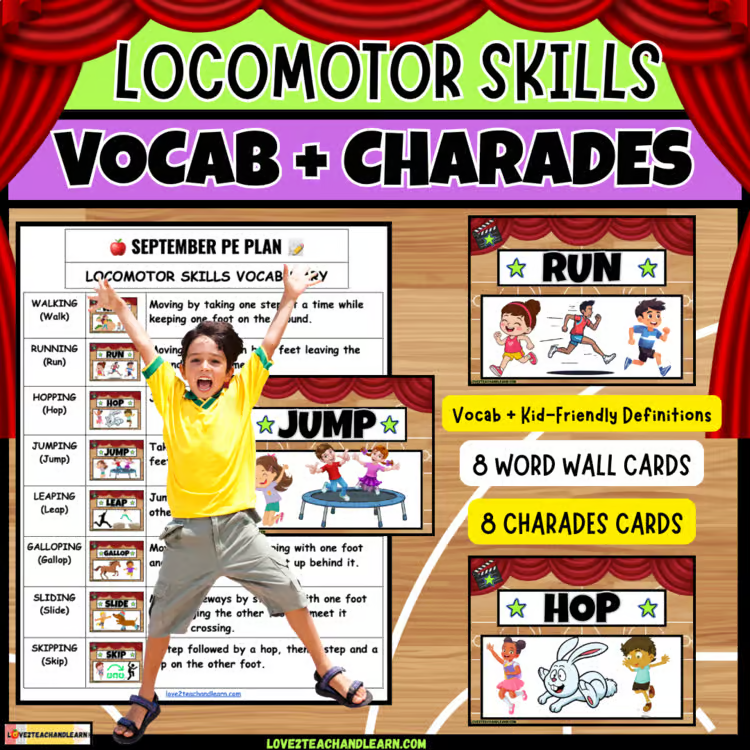
START WITH ESSENTIAL VOCABULARY – Teaching key locomotor vocabulary first gives students a common language to understand directions, learn new movement skills, and build confidence as they practice locomotor skills. Here are the 8 main locomotor skills that I introduce and teach to my students:
- WALKING (Walk) – Moving by taking one step at a time while keeping one foot on the ground.
- RUNNING (Run) – Moving quickly with both feet leaving the ground for a moment.
- HOPPING (Hop) – Jumping up and down on the same foot.
- JUMPING (Jump) – Taking off with two feet and landing on two feet.
- LEAPING (Leap) – Jumping from one foot and landing on the other foot.
- GALLOPING (Gallop) – Moving forward by stepping with one foot and bringing the other foot up behind it.
- SLIDING (Slide) – Moving sideways by stepping with one foot and bringing the other foot to meet it without crossing.
- SKIPPING (Skip) – A step followed by a hop, then a step and a hop on the other foot.
DISCUSS OTHER KEY TERMS STUDENTS WILL HEAR THROUGHOUT THE UNIT INCLUDING: Locomotor Skills, Travel, Speed, Direction, Pathway, Balance, Coordination, Body Control, Forward, and Backward.
DEMONSTRATE AND MODEL EACH SKILL – Demonstrating and modeling each locomotor skill before students practice helps them see the correct movement pattern, understand your expectations, and build the confidence they need to perform each skill safely and successfully.
PLAY QUICK LOCOMOTOR SKILLS PRACTICE GAMES – Playing quick, fun games like Simon Says and Follow the Leader gives students lots of opportunities to practice locomotor skills in an exciting, low-pressure environment, helping them build confidence while improving their coordination, listening skills, and movement patterns. Some of my favorites include:
- Animal Walks
- Follow the Leader
- Move & Freeze
- Red Light, Green Light or ZOO, STOP, GO
- Locomotor Simon Says
- Musical Movement
- Roll the Dice Locomotor Games
PLAY FUN PE GAMES THAT REINFORCE LOCOMOTOR SKILLS – Here’s a list of my favorites:
- FARMER TAG (Game #7 in my book) – Get all the “How to Play” Details HERE.
- ICE SKATING TAG (Game #11 in my book) – Get all the GAME DETAILS HERE.
- FLOAT YOUR BOAT (Game #26 in my book) – Learn “How to Play” HERE.
- CANDYLAND TRAIL (Game #46 in my book) – Get all the GAME DETAILS HERE.
- LAVA RIVER RUN (Game #49 in my book) – Get all the “How to Play” Details HERE.
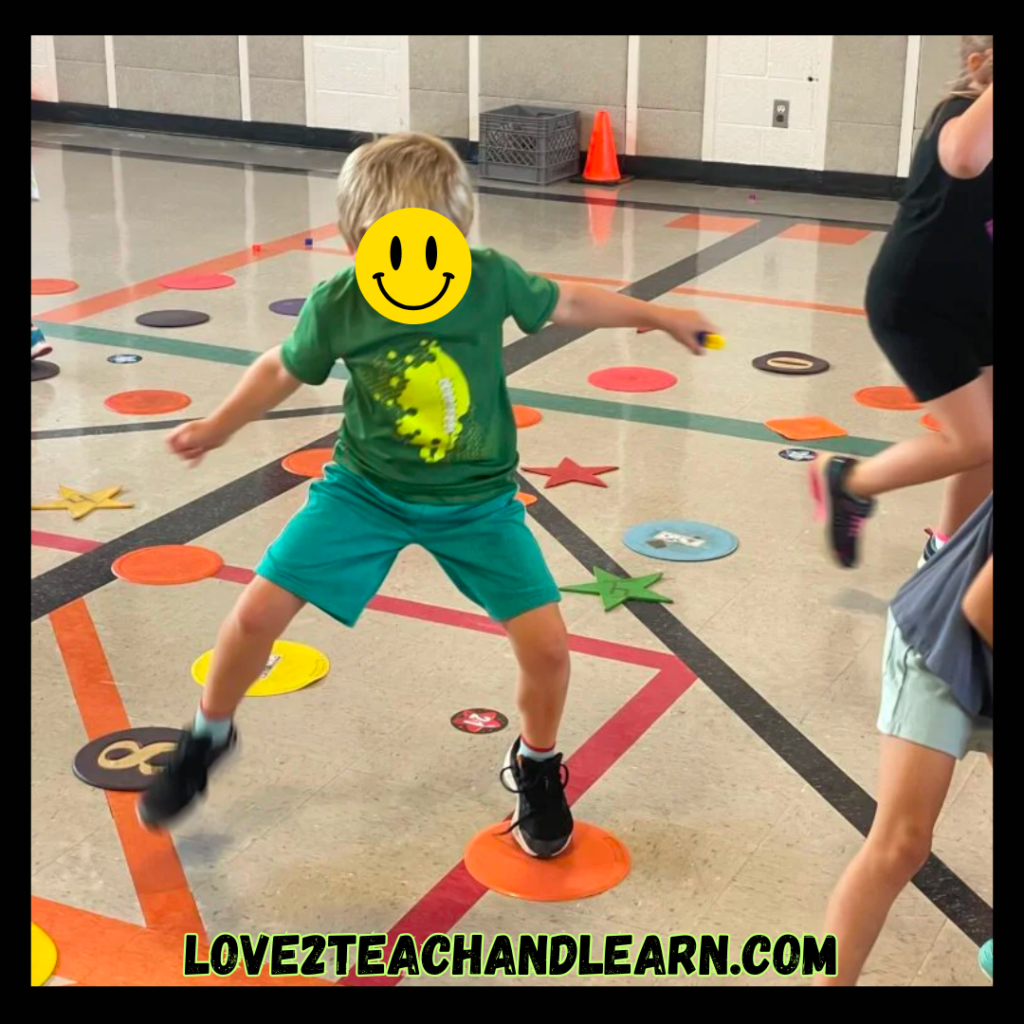
PLAY LOCOMOTOR SKILLS CHARADES – This is a great locomotor skills practice game. You can check it out RIGHT HERE.
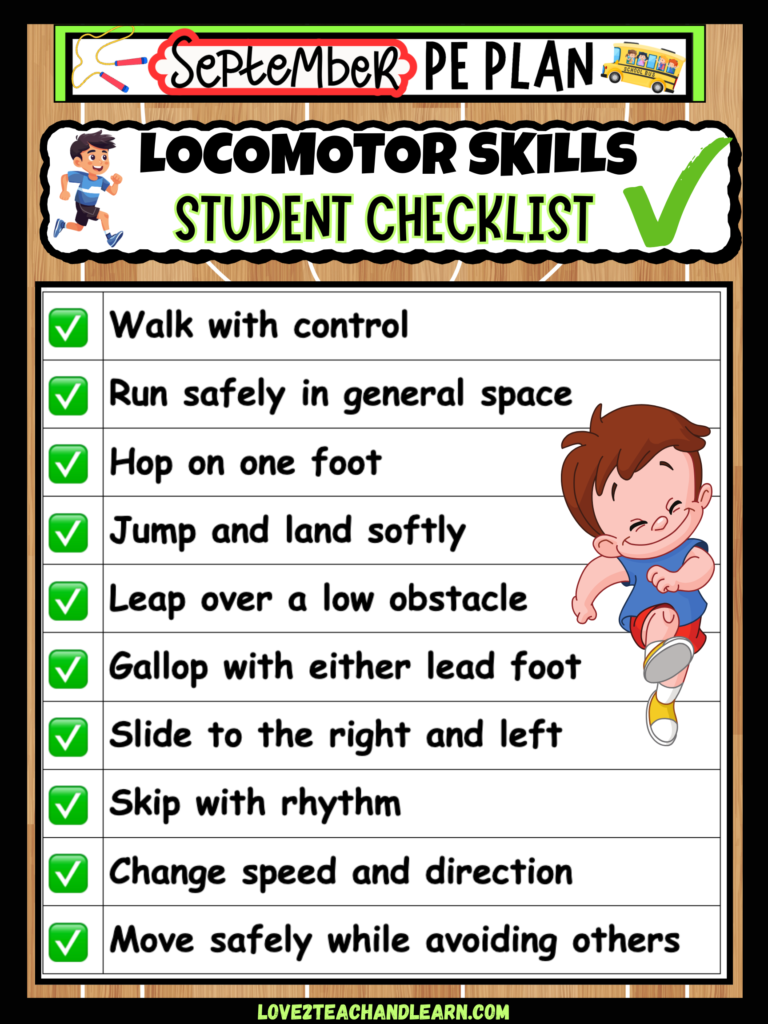
ASSESS YOUR STUDENTS OFTEN THROUGHOUT THE SCHOOL YEAR – Assessing students’ locomotor skills throughout the school year helps you monitor their progress, identify skills that need additional practice, and ensure every student is building the confidence and movement skills needed to be successful in elementary PE.
The locomotor skills that I assess include:
- Walks with control
- Runs safely in general space
- Hops on one foot
- Jumps and lands softly
- Leaps over a low obstacle
- Gallops with either lead foot
- Slides to the right and left
- Skips with rhythm
- Changes speed and direction
- Moves safely while avoiding others
*LOCOMOTOR SKILLS BONUS TIP: Don’t rush through locomotor skills during the first month of school. Students who develop strong movement patterns early in the year are more confident, more successful, and better prepared for sports, fitness activities, and cooperative games later on.
BALANCE & BODY CONTROL
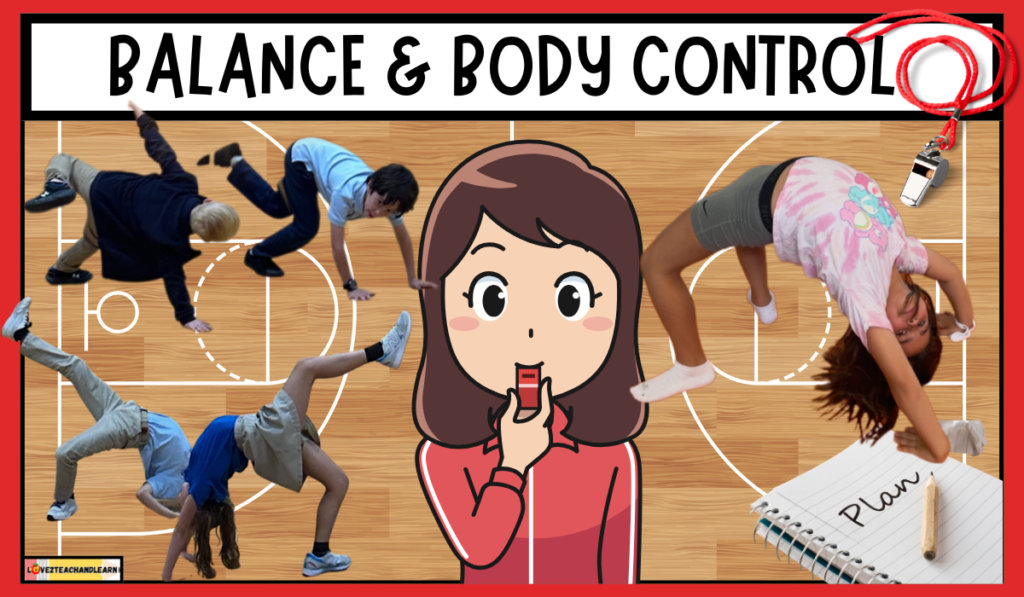
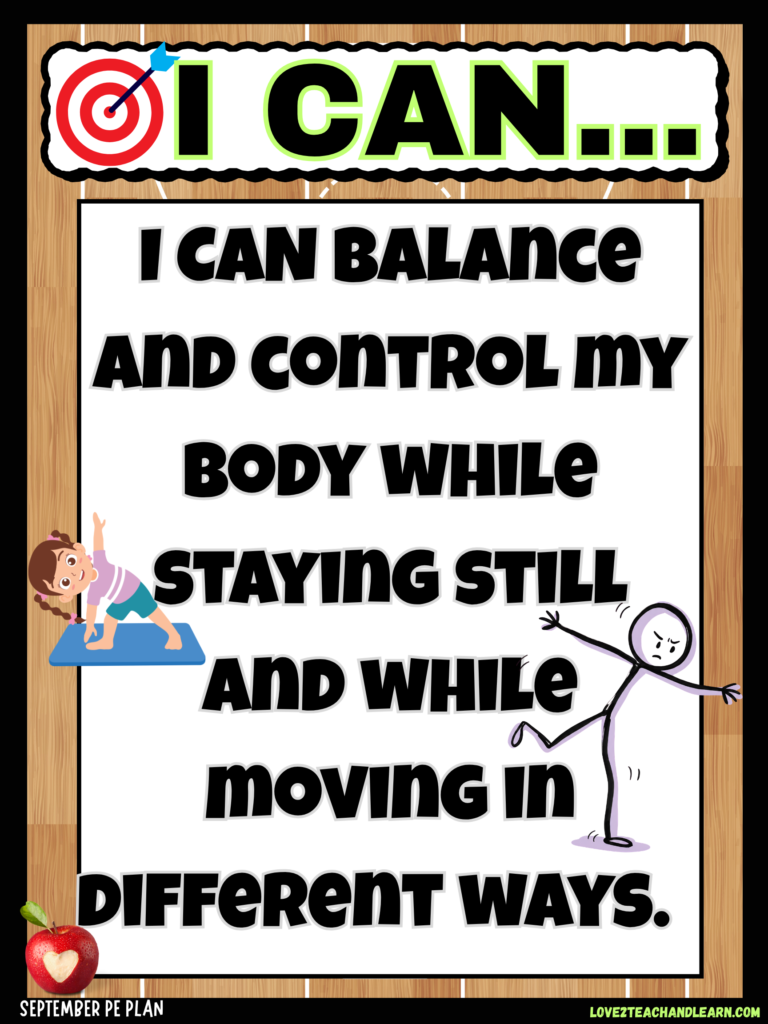
Balance and body control are foundational movement skills that help students move safely, improve coordination, and prepare for sports, dance, gymnastics, fitness, and everyday movement activities.
RECOMMENDED TEACHING RESOURCES AND IDEAS FOR YOU
DEMONSTRATE, MODEL, and THEN HAVE STUDENTS PRACTICE STATIC BALANCE (Keeping your body still without falling over). Here are some quick practice activities to try:
- One Foot Balance
- Flamingo Stand
- Airplane Pose
- Tree Pose
- Statue Challenge
- Balance While Holding a Bean Bag
DEMONSTRATE, MODEL, and THEN HAVE STUDENTS PRACTICE DYNAMIC BALANCE (Keeping your balance while your body is moving). Here are some quick practice activities to try:
- Walk on Floor Lines
- Heel-to-Toe Walking
- Balance Beam
- Step Over Cones
- Balance Pathways
PLAY FUN PE GAMES THAT REINFORCE BODY CONTROL & BALANCE – Here’s a list of my favorites:
- REVERSE PAC-MAN TAG (Game #4 in my book) Learn “HOW TO PLAY” HERE.
- ICE CREAM TAG (Game #9 in my book) Get the “HOW TO PLAY” Details HERE.
- LINES & HOOPS TAG (Game #15 in my book) Learn “HOW TO PLAY” HERE.
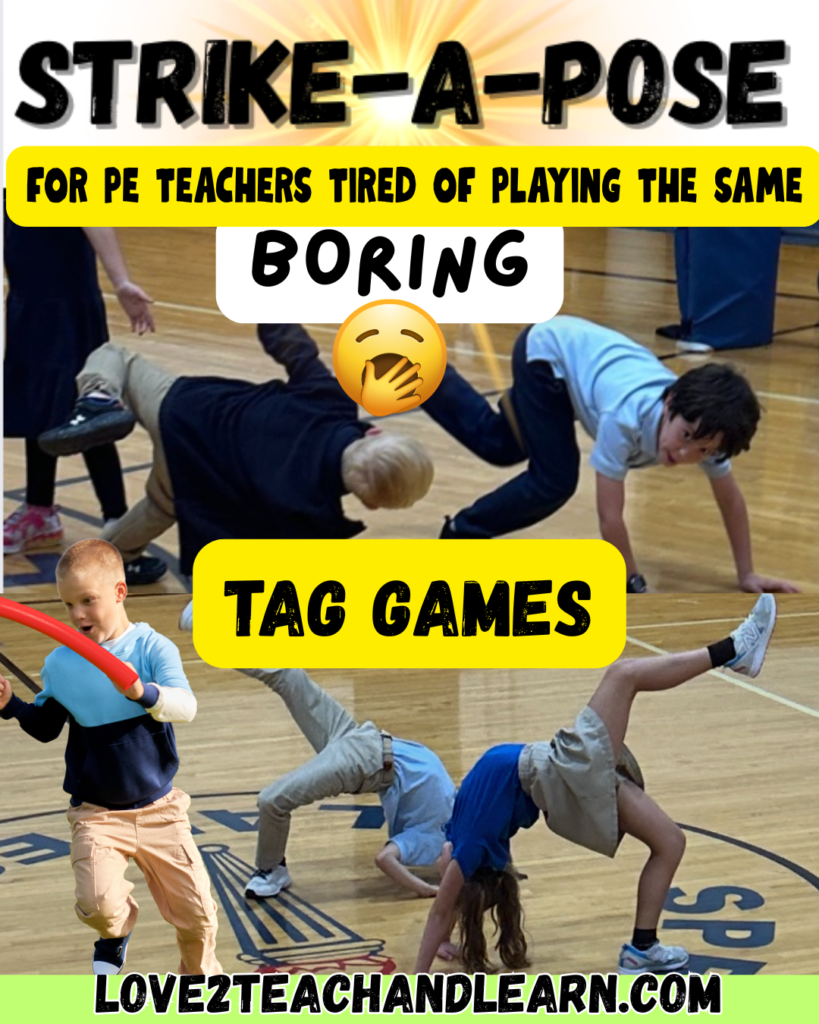
- STRIKE-A-POSE TAG (Game #13 in my book) Get the GAME DETAILS HERE.
COSMIC KIDS YOGA is a total blast and is great for practicing body control and balance – you can check it out on YouTube RIGHT HERE.
*BODY & BALANCE BONUS TIP: Spend just a few minutes practicing balance activities during your warm-up throughout September. Short, daily practice sessions help students develop stronger body control and confidence that will carry over into every PE unit for the rest of the school year.
COOPERATION & TEAMWORK
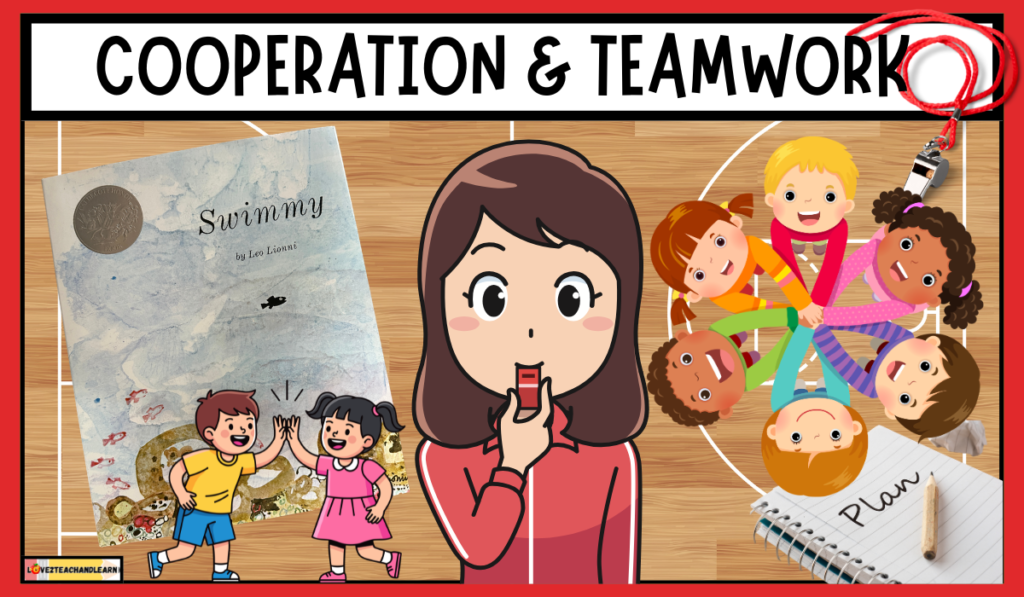
Teaching cooperation and teamwork at the beginning of the school year helps students build the communication, problem-solving, and social skills they need to be successful in every PE lesson.
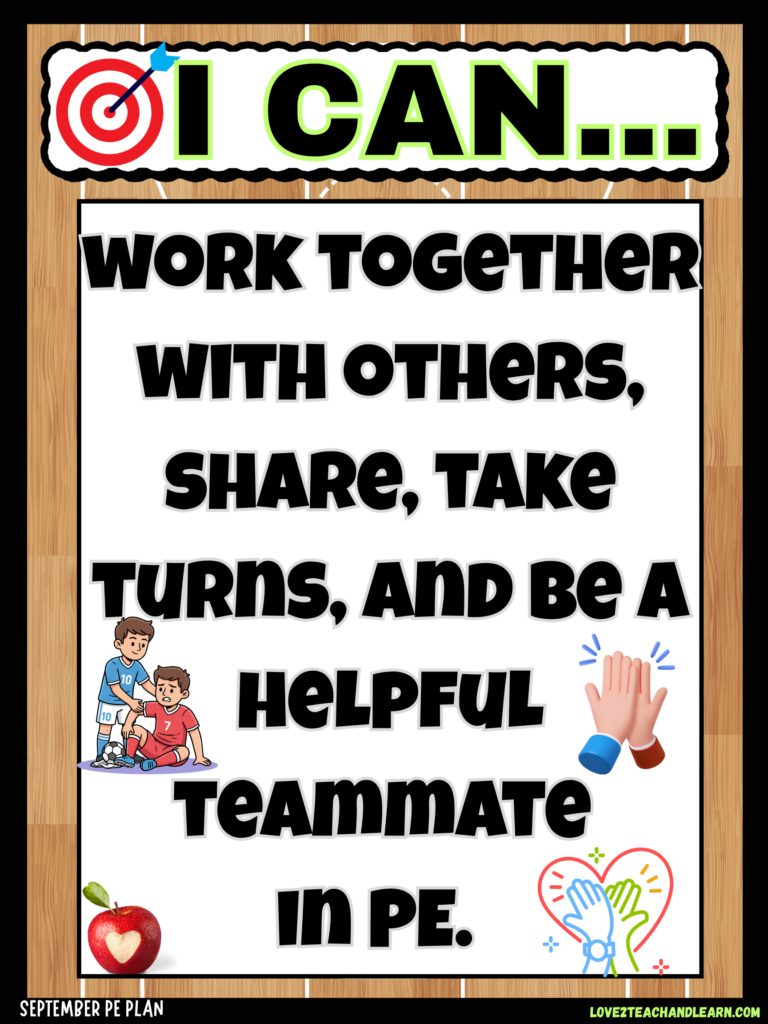
As students learn to work together, encourage one another, share equipment, and include everyone, they create a positive and respectful learning environment that makes games, activities, and skill development more enjoyable and successful throughout the entire school year.
RECOMMENDED TEACHING RESOURCES AND IDEAS FOR YOU
READ ALOUD THE CHILDREN’S BOOK SWIMMY by Leo Lionni – This is a wonderful book for introducing teamwork and cooperation because it teaches students that when everyone works together and uses their unique strengths, they can accomplish far more than they ever could alone.
USE OTHER PE READ ALOUDS THAT TEACH ABOUT TEAMWORK including:
- The Berenstain Bears Play a Good Game by Stan & Jan Berenstain – teaches sportsmanship, teamwork, fair play, and encouraging teammates rather than focusing only on winning. (K-2)
- The Soccer Fence by Phil Bildner – This story follows two groups of children who love soccer but are divided by a fence until they discover that playing together is much more fun than staying apart. (1-5)
- Good Sports: Rhymes About Running, Jumping, Throwing, and More by Jack Prelutsky – Fun poems celebrating many different sports while encouraging movement, participation, and enjoying physical activity. (K-3)
- Pete the Cat: Play Ball! by James Dean – Pete learns about trying his best, supporting teammates, and having fun regardless of the score. (PreK-2)
- Dino-Basketball by Lisa Wheeler – A humorous basketball story that highlights teamwork, passing, and working together.(K-4)
DISCUSS IMPORTANT VOCABULARY WITH KID-FRIENDLY DEFINITIONS including:
- COOPERATION – Working together to reach a goal.
- TEAMWORK – Helping each other and working as one team.
- PARTNER – A person you work with during an activity.
- TEAM – A group of people working together.
- ENCOURAGE – Saying or doing something kind to help someone keep trying.
- RESPECT – Being kind, listening, and treating others the way you want to be treated.
- COMMUNICATION – Talking, listening, and sharing ideas with others.
- RESPONSIBILITY – Doing your job and making good choices.
- PROBLEM SOLVING – Thinking of ways to fix a problem or complete a challenge.
- TRUST – Believing someone will do the right thing and help the team.
MODEL WHAT GOOD TEAMWORK LOOKS LIKE – Discuss and demonstrate positive teamwork behaviors including Listening when others are talking, Taking turns, Sharing equipment, Using kind words, Helping classmates, Including everyone, Solving problems calmly, and Celebrating teammates’ success.
HAVE STUDENTS ACT OUT THE DESIRED BEHAVIORS – Having students act out positive teamwork behaviors through short skits helps them see what cooperation looks and sounds like in real-life situations, making it easier to understand and practice these important social skills during PE activities. Plus, it’s super fun.
PLAY FUN PE GAMES THAT REINFORCE TEAMWORK AND COOPERATION – Here’s a list of my favorites:
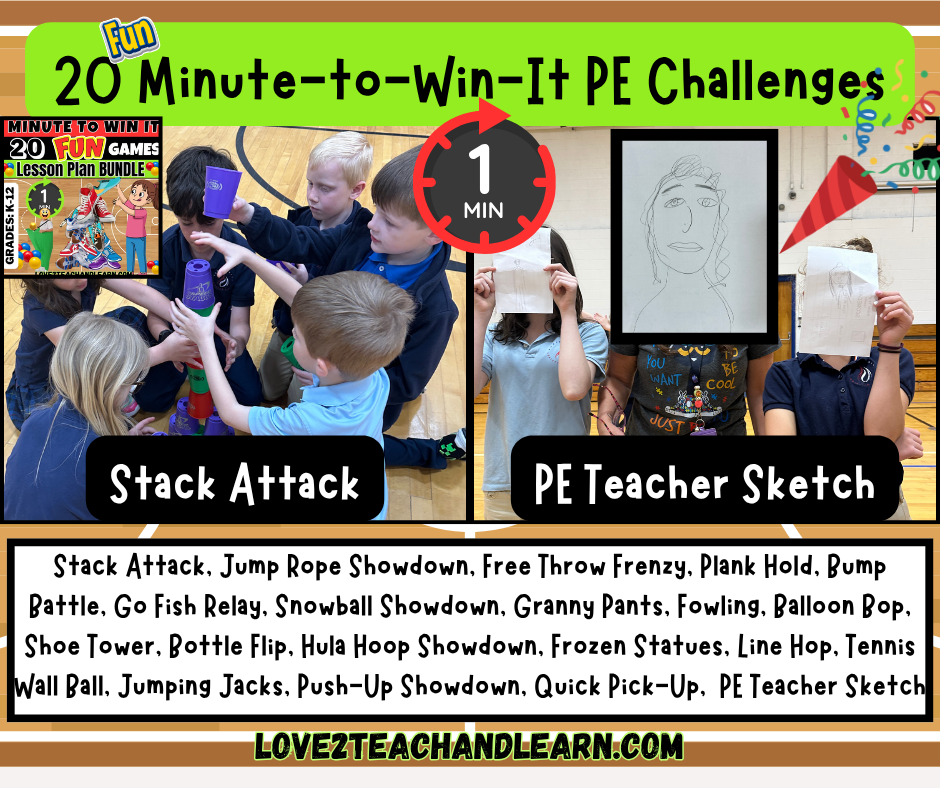
- CHAIN TAG (Game #2 in my book) – Get all the GAME DETAILS HERE.
- TURTLE TAG (Game #5 in my book) – Learn “HOW TO PLAY” HERE.
- CATCH & STACK (Game #33 in my book) – Learn “HOW TO PLAY” HERE.
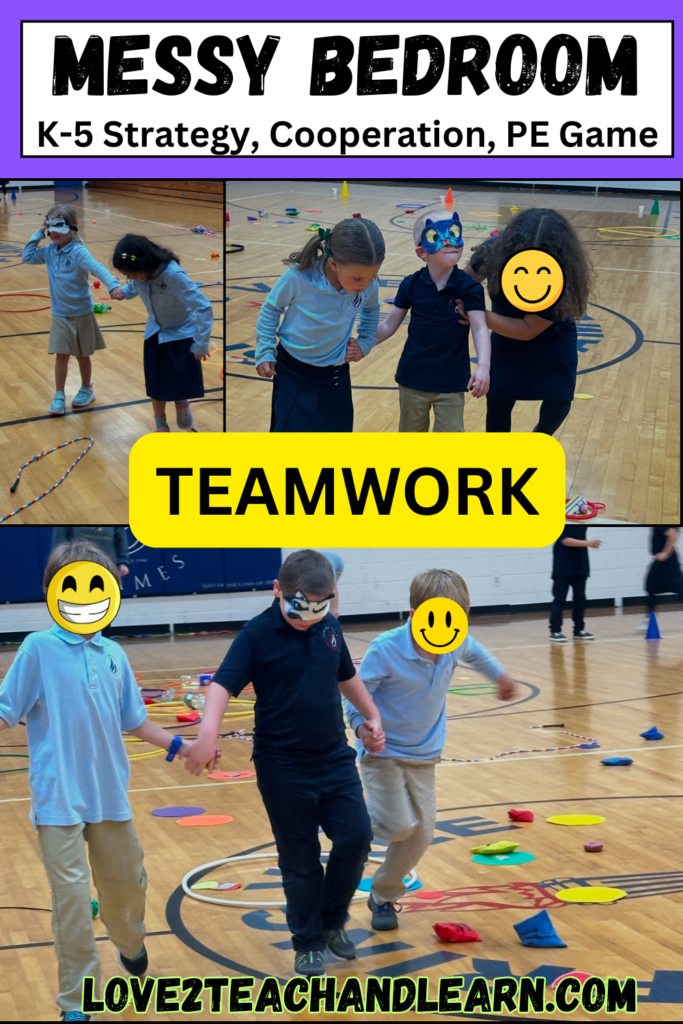
- MESSY BEDROOM (Game #35 in my book) – Get all the GAME DETAILS HERE.
CHOOSE TEAMS FAIRLY – Here are 27 Fun and Fair Ways to Choose Teams Without Tears.
*COOPERATION AND TEAMWORK BONUS TIP – Start with partner activities before moving to small groups or whole-class cooperative games. As students build trust and communication skills, they’ll be more successful working together in larger teams throughout the year.
RESPECT, MANNERS, & SPORTSMANSHIP
Teaching respect, manners, and sportsmanship from the very first day of school helps establish a positive, safe, and welcoming learning environment where every student feels valued and supported.
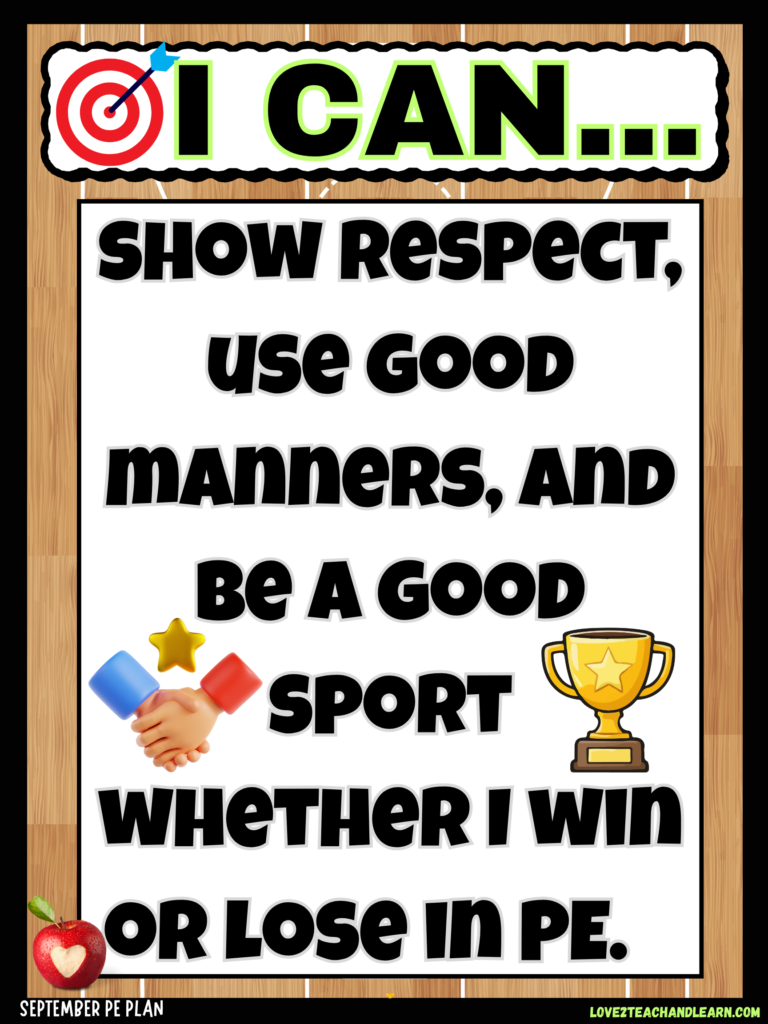
By consistently reinforcing these important character traits throughout the entire school year, PE teachers help students develop lifelong habits of kindness, fairness, responsibility, and respect that lead to better teamwork, stronger relationships, and greater success both in the gym and beyond.
RECOMMENDED TEACHING RESOURCES AND IDEAS FOR YOU
TALK ABOUT WHAT IT MEANS TO BE RESPECTFUL – I ask my students to concentrate on RESPECTING 4 -THEMSELVES, TEACHER, OTHERS, and the EQUIPMENT. It’s also a good idea to discuss the importance of:
- Accepting mistakes with a positive attitude
- Listening when others are speaking
- Following directions the first time
- Waiting your turn
- Using kind words
- Respecting personal space
- Respecting different ability levels (This is a BIG ONE)
EXPLAIN WHAT IT MEANS TO HAVE GOOD MANNERS – I demand that my students have good manners and use “please” and “thank you” at all times when they are in my class. You can read about how I handle good manners during tag games HERE.
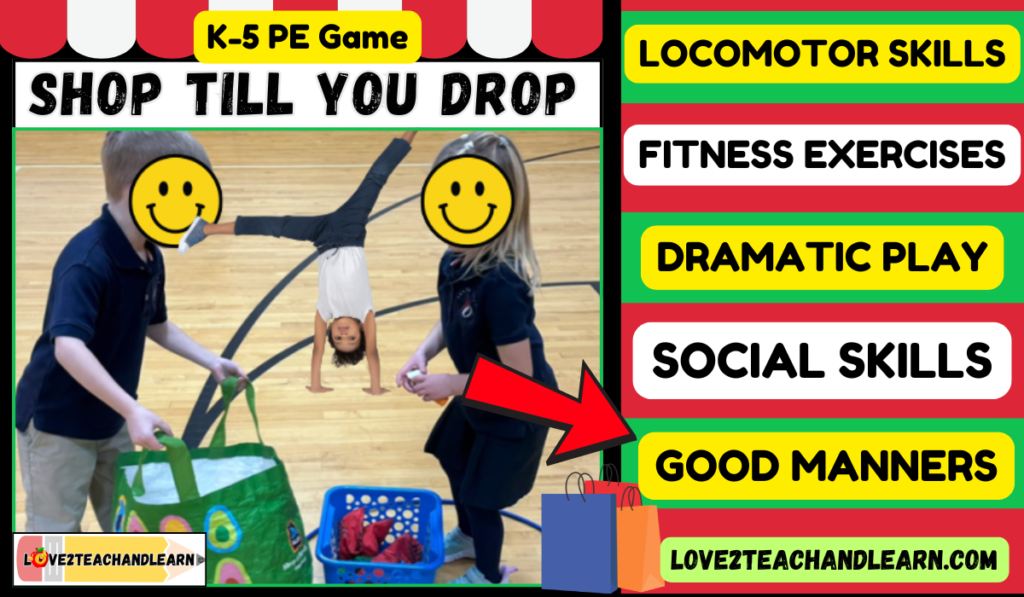
PLAY THE PE GAME SHOP TILL YOU DROP (Game #32 in my Book) – It’s a really fun game that incorporates locomotor skills, fitness exercises and GOOD MANNERS. Your students will love it.
EXPLAIN, MODEL, and PRACTICE GOOD SPORTSMANSHIP OFTEN – This helps students understand what respectful behavior looks like, builds positive habits, and encourages them to treat others with kindness and fairness during every PE activity throughout the school year.
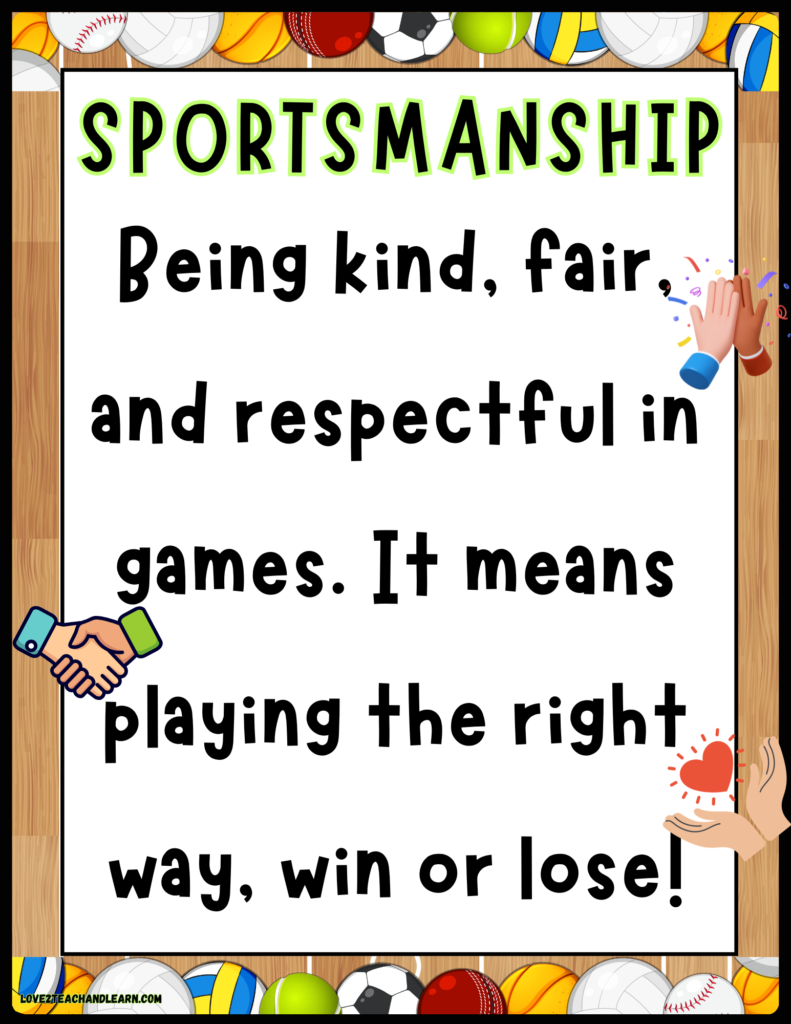
DISCUSS SPECIFICALLY WHAT IT MEANS TO BE A GOOD SPORT including:
- Playing by the rules
- Being honest
- Encouraging teammates
- Congratulating others
- Accepting wins and losses respectfully
- Trying your best every time
- Showing self-control
READ ALOUD THE CHILDREN’S BOOK THE RECESS QUEEN by Alexis O’Neill – This story naturally leads to discussions about making new friends, respecting others, including everyone, using kind words, solving conflicts peacefully, being a good leader, and a good sport.
*RESPECT, MANNERS, and SPORTSMANSHIP BONUS TIP – Praise respectful behavior as often as (maybe even more than) you correct misbehavior. Recognizing students for showing kindness, good manners, and sportsmanship encourages others to make positive choices and helps build a supportive PE culture.
CLASS DISMISSED
By focusing on these six essential PE skills during the first month of school, you’ll create a strong foundation for a fun, safe, and successful year in the gym.
Investing time in teaching movement skills, teamwork, respect, and positive behaviors now will pay off all year long as your students grow into confident, respectful, and active learners.
Have an amazing September, and here’s to your best PE year yet!
🎃 Ready for Your October PE Plan?
Ready to keep the momentum going? Head over to my OCTOBER PE PLAN for a complete look at the next 7 essential K–5 PE skills, including rolling, bowling, underhand throwing, catching, tracking, throwing for accuracy, and partner cooperation—plus tons of teaching tips, activities, games, and assessment ideas along the way!
👉 Check out the complete October PE Plan here!
LET’S CONNECT
If you’re a PE Teacher, I’d love to connect with you. You can find me hanging out in all of these Amazing places.
Mrs. T’s “Always Growing” PE Games Bundle
Hey Friend – Are you a K-5 PE Teacher looking to save MASSIVE time?
With my *HUGE – 250+ Pages* FULL YEAR Elementary PE Resource “ALWAYS GROWING” BUNDLE you will save SO MUCH VALUABLE planning time…
AND… you’ll be prepared for every PE class with creative, unique, and SUPER FUN skill-based games that your PE students will ABSOLUTELY LOVE!
You can check out my GIANT MEGA BUNDLE Right Here!
Oh, and if you want the BIGGEST BANG FOR YOUR BUCK – My SEPTEMBER PE PLAN Bundle is already included in my MEGA “Always Growing” Bundle. How Cool is That?
Hey – Thanks so much for stopping by today to check out my SEPTEMBER PE PLAN.
I really appreciate it and I hope your day is filled with plenty of FUN and FITNESS.
Oh, and remember PE Friends… IF YOU HAD FUN, YOU DEFINITELY WON!